THE LATEST IN ROOFING
When the summer sun beats down, your roof is the first line of defense. If you live in a warm region-whether it's a tropical area, a desert climate, or just a place where summers get uncomfortably hot-the question matters: will your roof help keep the heat out, or will it turn your home into an oven?
Many people hear the word "metal" and automatically assume it makes things hotter. After all, think about the roof of a car on a sunny day-it's scorching to the touch. But stone-coated metal roofing works very differently. In fact, when properly designed and installed, it is one of the smartest choices you can make for hot-climate homes.
Let's take a closer look at how stone-coated metal roofs perform in heat, why they keep homes cooler than you might expect, and whether they deliver real value where temperatures climb.
First, Let's Clear Up a Major Myth
It's a common belief: metal roofs make houses hotter in summer. But that idea is based on old, outdated information.
Traditional bare metal roofing, especially in dark colors, can indeed absorb a lot of heat. But modern stone-coated metal roofing is engineered with a multi-layer construction designed specifically to handle solar exposure. Unlike bare metal that tends to get extremely hot, the stone coating-made from natural basalt or granite chips bonded to the steel core-acts as a thermal barrier. The stone granules reflect a significant portion of the sun's radiation rather than absorbing it, with lighter colors typically reflecting 25% to 40% of incoming solar energy.
Manufacturers often apply cool-roof finishes that boost solar reflectivity even further. Some stone-coated metal roofs reflect up to 53% of solar energy, compared to only about 10% for typical dark asphalt shingles. That difference translates directly to lower attic temperatures, a cooler living space, and less strain on your air conditioning system.
So no, metal roofs do not automatically make homes hotter. Stone-coated metal, in particular, is built to reflect heat away.
How Stone-Coated Metal Tiles Beat the Heat
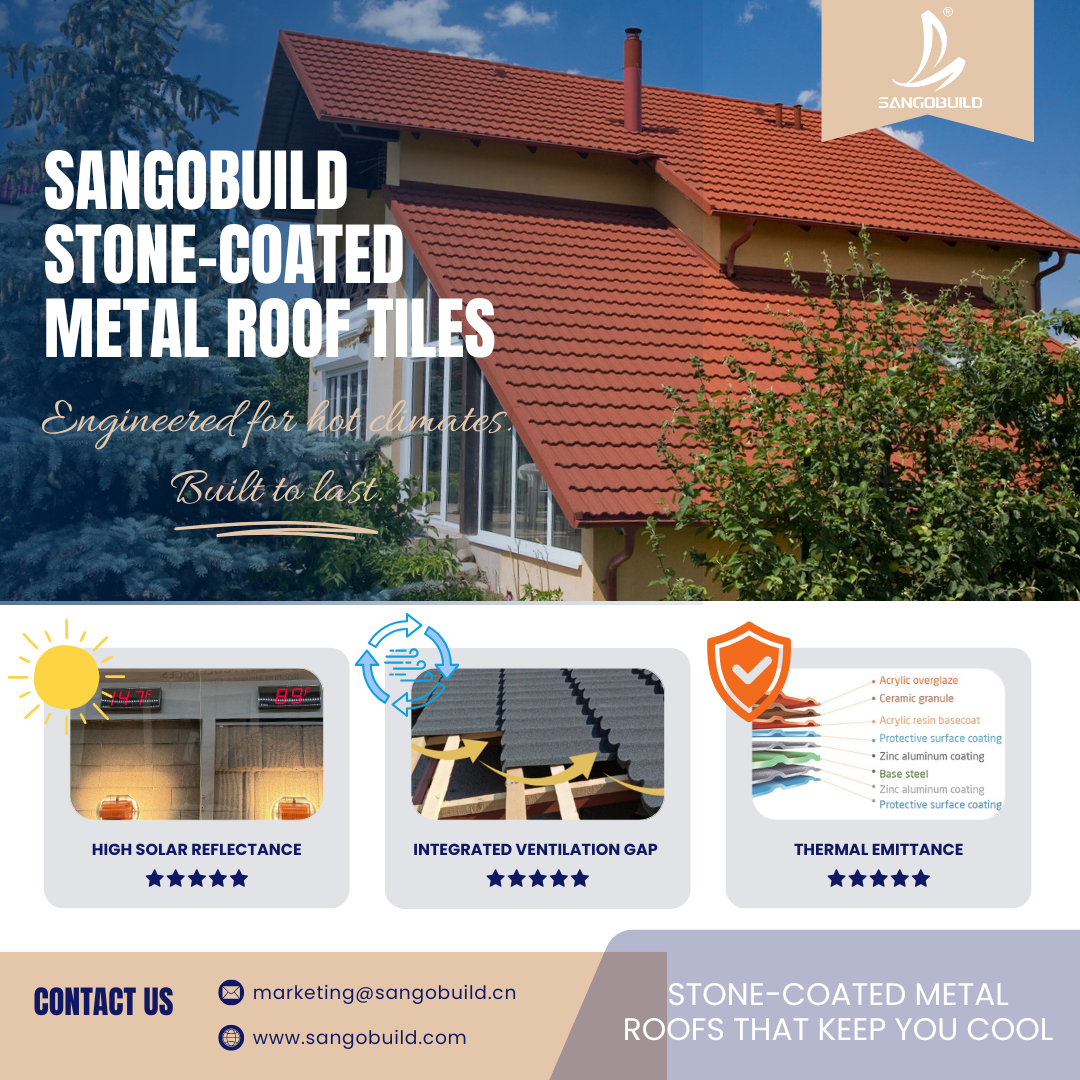
High Solar Reflectance
Natural stone particles have inherent reflective properties. When sunlight hits the roof, the stone granules bounce a large portion of the solar radiation back into the atmosphere instead of absorbing it into the building. Some stone-coated metal roofs achieve a Solar Reflectance Index (SRI) above 70, reflecting approximately 70% of solar radiation. That is a massive improvement over traditional dark-colored asphalt shingles, which absorb most of the sunlight that hits them and can heat up to 50 degrees hotter than the surrounding air temperature.
The Ventilation Factor
Reflecting sunlight is only half the story. Even the most reflective roof will absorb some heat—that is unavoidable. But stone-coated metal roofing systems offer something traditional roofs cannot match: an integrated ventilation gap.
When stone-coated metal tiles are installed over battens rather than directly on the roof deck, a small air gap is created beneath the tiles. This gap allows air to circulate naturally, carrying heat away before it can transfer into the attic. Ridge vents installed at the roof peak work with intake vents along the eaves to create a continuous airflow cycle, pushing hot air out and pulling cooler air in.
Thermal Emittance
Solar reflectance is important. But thermal emittance—the ability to radiate absorbed heat back out—is just as crucial. Stone-coated metal tiles, particularly those with high-quality stone coatings, have good thermal emittance properties. After absorbing some heat from the sun, they efficiently release that heat into the surrounding air rather than passing it downward into your attic. This works both ways: the roof stays cooler during the day, and at night it radiates away any remaining heat quickly.
Comparing Apples to Apples: Stone-Coated Metal vs. Asphalt in the Heat
Asphalt shingles absorb heat like a sponge. Dark granules soak up solar radiation and conduct it directly into the roof deck, which then radiates heat down into the attic. Attic temperatures can climb well over 130°F (54°C) on a hot summer day, forcing your AC to work much harder to keep the home comfortable.
Stone-coated metal roofing flips the script. Instead of absorbing heat, it reflects most of it away. The air gap beneath the panels provides an extra layer of insulation that asphalt simply cannot offer. And when it comes to durability, the comparison is almost laughable: asphalt shingles typically last 15 to 25 years before needing replacement, while stone-coated metal roofs routinely last 40 to 70 years.
That longevity matters even more in hot climates, where UV radiation accelerates the degradation of asphalt and other organic materials. Stone-coated metal resists UV fading and maintains structural integrity even at extreme temperatures above 113°F (45°C). The stone granules and acrylic coatings are engineered to hold up against years of intense sunlight without cracking, chalking, or losing color.
Beyond Heat: Durability Under Extreme Conditions
Hot climates often come with additional challenges. High humidity, heavy monsoon rains, and intense UV exposure all test a roof’s durability. Stone-coated metal roofing handles these conditions remarkably well.
The steel core provides exceptional impact resistance. Many stone-coated metal roofs carry a Class 4 impact rating-the highest rating available-meaning they can withstand very severe hail without fracturing. And because steel is non-combustible, stone-coated metal roofs typically achieve Class A fire ratings, a critical safety feature in wildfire-prone regions.
Corrosion resistance is another major strength. Quality stone-coated metal tiles use galvalume steel (a zinc-aluminum alloy coating) that offers superior protection against rust, even in humid or coastal environments where salt air can eat away at lesser materials. The stone coating itself adds an extra barrier, shielding the steel from moisture and airborne pollutants.
For homes in tropical or monsoon climates, stone-coated metal roofs also handle heavy rainfall better than most alternatives. The interlocking panel systems create seamless connections that prevent leaks even during intense downpours, and the inclined design encourages rapid water runoff.
Sangobuild stone-coated metal tiles are built for hot climates. We use high-strength Al-Zinc coated steel, natural stone granules, and advanced acrylic coatings. They're tested to ISO 9001, CE, and Class A fire standards. They resist corrosion, hail, and fading. And yes - they keep your home noticeably cooler in summer.

REQUEST A QUOTE
Copyright © Hangzhou Singer Building Materials Co., Ltd. All Rights Reserved |
Sitemap
| Powered by 


SEOKeywords:Roof Tile ManufacturerRoof Shingle ManufacturerAsphalt Shingle SupplierRain Gutter CompanyShingle Roofing CompanyWaterproof Tape For RoofPressed Steel Roofing TilesRain Gutter SystemGray Asphalt ShingleStone Coated Metal Roofing Manufacturer