THE LATEST IN ROOFING
When purchasing stone coated metal roof tiles, most buyers pay close attention to appearance, color, steel thickness, and price. However, one important specification is often overlooked: the aluminum-zinc coating weight of the steel substrate.
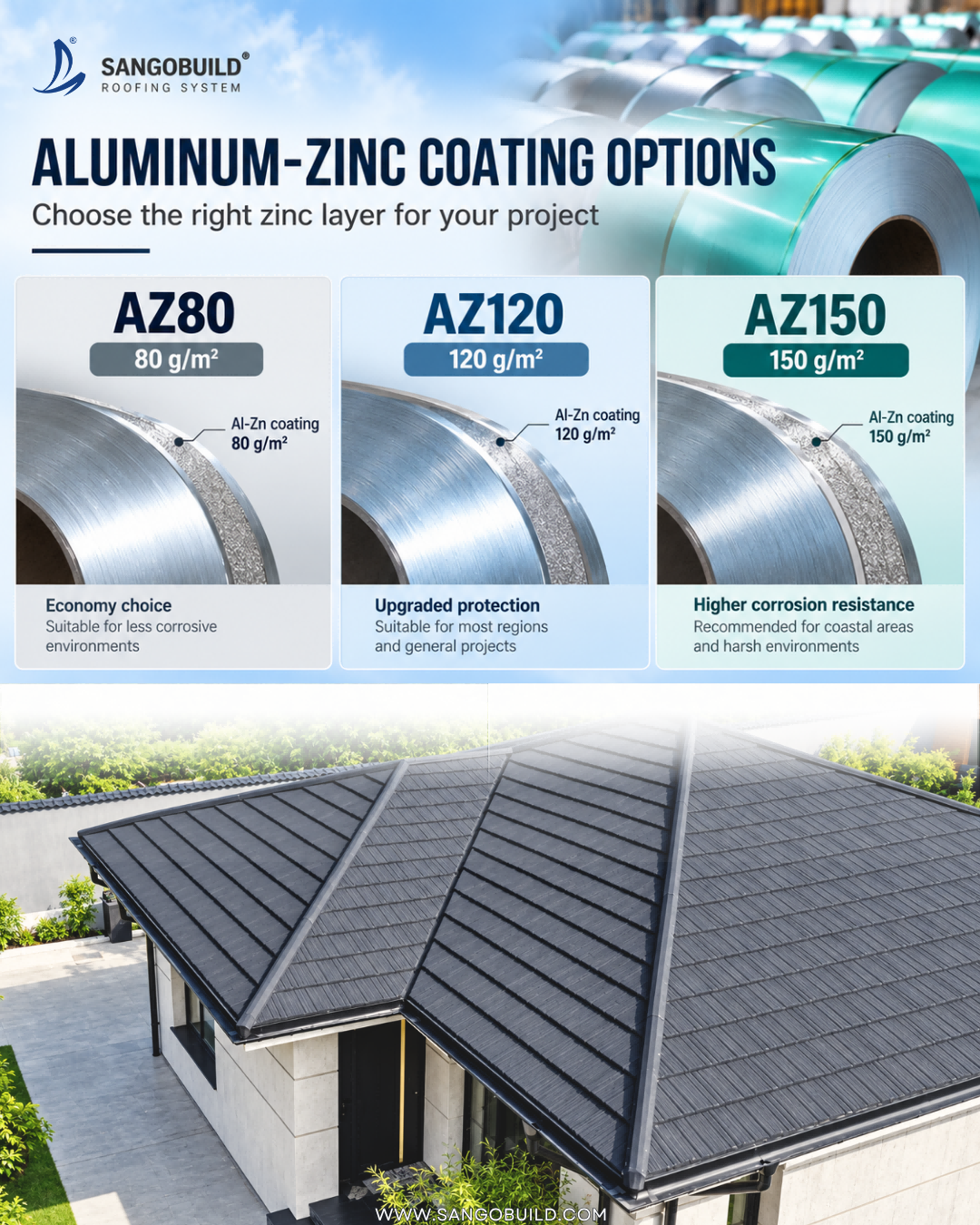
AZ80, AZ120, and AZ150 are three coating specifications frequently encountered in the roofing materials market. Although these numbers may look like minor differences on a product specification sheet, they can influence the steel's ability to resist corrosion, particularly when the roof is exposed to moisture, rainfall, coastal air, and other environmental conditions.
For distributors, contractors, and property developers, choosing the right coating is not simply about selecting the highest number. It is about finding a suitable balance between material cost, environmental exposure, expected service life, and project requirements.
So, what are the differences between AZ80, AZ120, and AZ150? And which one makes the most sense for your roofing project?
What Does AZ Coating Mean in Stone Coated Metal Roofing
AZ refers to an aluminum-zinc alloy coating applied to the surface of steel sheets through a hot-dip coating process. A typical aluminum-zinc alloy coating consists of approximately 55% Aluminum+43.4% Zinc+1.6% Silicon.
Each component contributes to the protective performance of the steel. Aluminum forms a stable barrier that helps slow down the penetration of moisture and corrosive elements. Zinc provides sacrificial protection, helping protect exposed steel around minor scratches and cut edges. Silicon improves the coating's bonding characteristics during manufacturing and forming.
This combination makes aluminum-zinc coated steel a widely used substrate for stone coated metal roofing. Unlike ordinary galvanized steel, which primarily relies on zinc protection, aluminum-zinc alloy coatings combine barrier protection with sacrificial protection. This makes them particularly suitable for roofing applications where long-term exposure to outdoor conditions is expected.
AZ80 vs AZ120 vs AZ150: Understanding the Differences
The main difference between AZ80, AZ120, and AZ150 is the total weight of the aluminum-zinc coating applied to both sides of the steel sheet, grams per square meter (g/m²).
AZ80 – An Economical Option for Standard Applications
Its relatively lower coating weight makes it a more economical choice for projects where initial material cost is a major consideration.
However, a thinner metallic coating provides a smaller protective reserve against long-term corrosion. Its suitability depends heavily on the local climate, exposure conditions, steel quality, and the complete roofing system.
AZ120 – A Balanced Choice Between Cost and Protection
Compared with AZ80, it contains more protective metallic coating, offering a greater corrosion-resistant reserve.
For manufacturers and roofing buyers, AZ120 can represent a practical middle ground between material expenditure and substrate protection.
It may be considered for: Residential roofing projects in moderately humid environments/Commercial buildings requiring a balance between budget and material performance/Distributors serving markets with varied climatic conditions.
AZ150 – A Higher Protection Level for Demanding Environments
Among these three metric specifications, AZ150 offers the highest coating weight and a greater protective reserve against corrosion.
This makes it an attractive option for projects exposed to more challenging outdoor conditions, including: High-humidity and tropical climates/Regions experiencing frequent rainfall/Coastal areas where salt exposure increases corrosion risks/Residential and commercial buildings designed for long-term use.
For buyers who prioritize substrate protection and long-term roofing performance, AZ150 is generally the stronger choice among these three options.
However, a higher coating weight alone does not guarantee a specific roof service life. Steel thickness, coating quality, installation details, maintenance, and environmental exposure must also be considered.
What Is the Current Market Trend for Aluminum-Zinc Roofing Materials
The international roofing market is becoming increasingly focused on long-term product performance rather than simply purchasing materials at the lowest possible price.
Tropical and Coastal Markets Require More Attention to Corrosion Protection
In Southeast Asia, Africa, the Middle East, and coastal regions, roofing materials can face a combination of high humidity, heavy rainfall, strong sunlight, and airborne salts.
In markets such as North America, Australia, and New Zealand, buyers and construction professionals often refer to established material standards when evaluating coated steel products.
For example, ASTM A792 covers 55% aluminum-zinc alloy-coated steel sheet. The U.S. residential building code also references AZ50 as a minimum corrosion-resistance specification for this type of steel roofing material.
Choose the Right Roofing Material with SANGOBUILD
Since 2006, SANGOBUILD has focused on lightweight roofing materials and complete roofing system solutions for international markets.
Our stone coated metal roof tiles combine a durable aluminum-zinc coated steel substrate with protective resin treatments and ceramic-coated natural stone granules, providing an attractive roofing solution for residential, commercial, and renovation projects.

REQUEST A QUOTE
Copyright © Hangzhou Singer Building Materials Co., Ltd. All Rights Reserved |
Sitemap
| Powered by 


SEOKeywords:Roof Tile ManufacturerRoof Shingle ManufacturerAsphalt Shingle SupplierRain Gutter CompanyShingle Roofing CompanyWaterproof Tape For RoofPressed Steel Roofing TilesRain Gutter SystemGray Asphalt ShingleStone Coated Metal Roofing Manufacturer